I'm tired of the privilege of apathy argument
Recently, I’ve noticed this and similar images spreading across the internet. Our growing reliance on video shorts and memes to explain complex issues is disheartening.
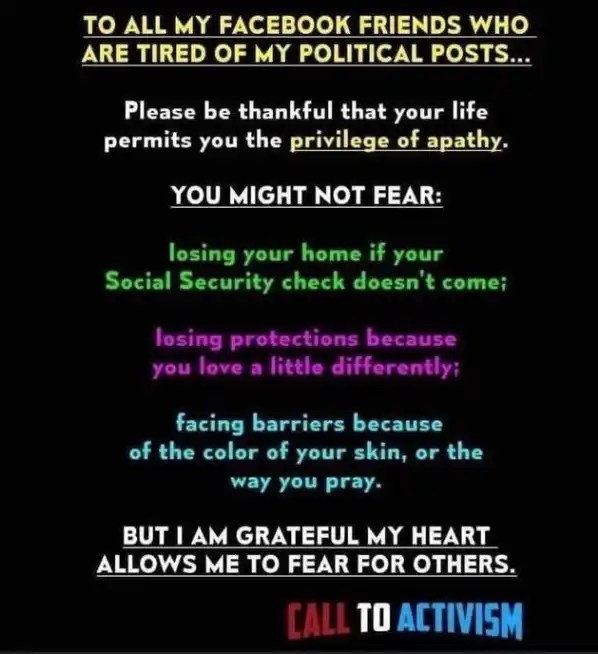
I have some problems with this approach…
First, the “privilege of apathy” oversimplifies why someone might disengage from political discourse. It assumes that a lack of engagement stems solely from a position of privilege, ignoring the complexity of individual circumstances. For example, someone might avoid political posts not because they don’t care but because they’re overwhelmed by mental health struggles, financial stress, or personal crises. Labeling this disengagement as “apathy” dismisses these valid reasons and reduces a nuanced issue to a moral failing.
Second, the argument employs a guilt-tripping tactic that alienates rather than educates. Reframing disengagement as a privilege shames people instead of fostering understanding or dialogue. This approach risks pushing away potential allies who might otherwise be open to learning about systemic issues. Effective activism often relies on building bridges, not burning them. For instance, research on social movements shows that successful activism usually involves meeting people where they are, not chastising them for where they aren’t. The “privilege of apathy” argument skips this step, assuming moral superiority without offering a constructive path forward.
Third, the argument lacks specificity and depth in addressing the systemic issues it raises, such as housing insecurity, discrimination based on sexual orientation, or racial and religious barriers. These serious, structural problems deserve detailed discussion, policy proposals, and actionable steps. Instead, the message uses them as rhetorical devices to make a point without engaging with the root causes or potential solutions. This is lazy because it prioritizes emotional impact over substance. For example, suppose someone is genuinely concerned about Social Security cuts. In that case, they might discuss specific policy changes, like proposals to raise the retirement age and their impact on vulnerable populations. The approach, however, opts for a vague, emotional appeal that doesn’t advance the conversation.
Finally, the “privilege of apathy” argument assumes a binary: you’re either an activist or complicit. This ignores the spectrum of engagement that exists in reality. Not everyone can or wants to be a full-time activist, but that doesn’t mean they’re apathetic. People can contribute in minor ways—voting, donating, or having private conversations—that don’t involve engaging with every political post on social media. By painting disengagement as a privilege, the argument dismisses these contributions and fails to acknowledge the diversity of ways people can care about and address societal issues.